What is an Ectopic Pregnancy? Signs Every Woman Should Know
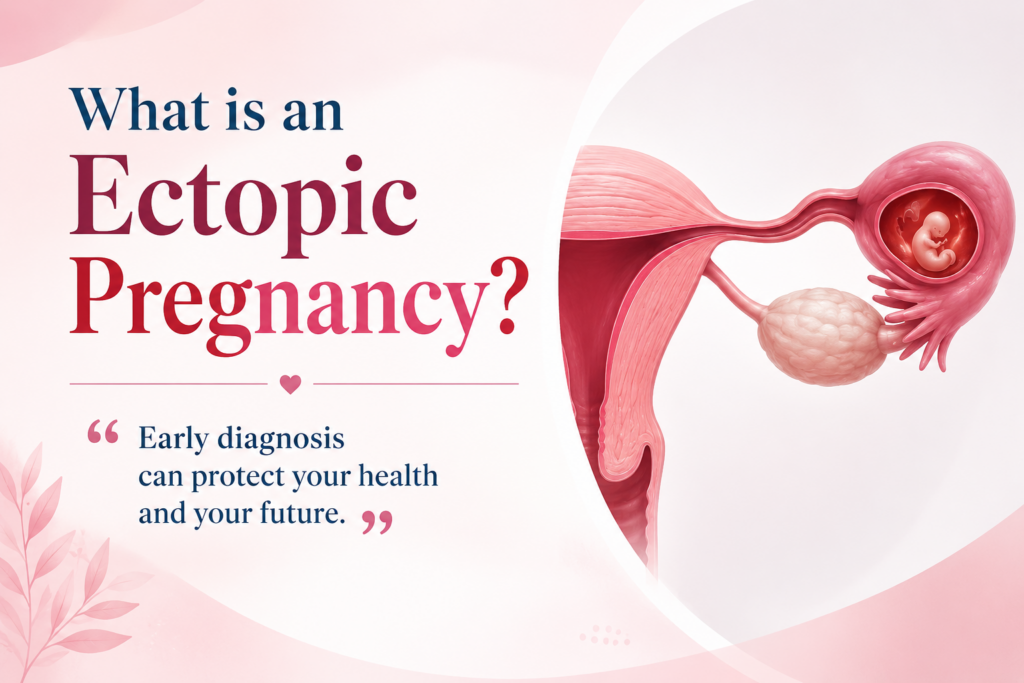
Pregnancy is usually a joyful journey, but in some cases, it can develop in a way that requires urgent medical attention. As a gynecologist, one of the most serious early pregnancy complications I encounter is an ectopic pregnancy. Women experiencing a High risk pregnancy in Dhanori should be aware of this condition because early diagnosis can be life-saving. Understanding the warning signs and seeking prompt medical care can help prevent severe complications while protecting your future reproductive health. What is an Ectopic Pregnancy? An ectopic pregnancy occurs when a fertilized egg implants outside the uterus instead of inside the uterine cavity. A healthy pregnancy develops within the uterus, where the growing baby has enough space and blood supply to develop normally. In an ectopic pregnancy, the fertilized egg most commonly implants in the fallopian tube, which is why it is often called a tubal pregnancy. Less commonly, it may implant in the ovary, cervix, or abdominal cavity. It is important to understand that an ectopic pregnancy cannot continue normally. Some women believe that the pregnancy may eventually move into the uterus on its own, but medically this is not possible. Without timely treatment, the pregnancy can continue to grow and cause serious complications. Where Can an Ectopic Pregnancy Occur? Although the fallopian tube is the most common location, an ectopic pregnancy may develop in different areas, including: Fallopian tube (Tubal pregnancy) Ovary Cervix Abdominal cavity Since these locations cannot support a growing pregnancy, immediate medical evaluation is necessary once the condition is diagnosed. Why is an Ectopic Pregnancy Dangerous? An ectopic pregnancy is considered a medical emergency because the growing pregnancy can rupture nearby tissues, leading to severe internal bleeding. If the fallopian tube ruptures, it may result in: Heavy internal bleeding Severe abdominal pain Sudden drop in blood pressure Dizziness or fainting Shock For this reason, ectopic pregnancy is classified as a pregnancy complications treatment emergency that requires immediate medical attention. Women receiving high-risk pregnancy care should never ignore symptoms suggestive of this condition. Early Signs and Symptoms of an Ectopic Pregnancy Symptoms may vary from one woman to another, but some warning signs are commonly seen. Positive Pregnancy Test Most women have a positive pregnancy test before symptoms appear. Lower Abdominal or Pelvic Pain Persistent or severe pain on one side of the lower abdomen is often one of the earliest symptoms. Vaginal Spotting or Bleeding Light bleeding or spotting during early pregnancy should always be evaluated by a gynecologist. Shoulder Pain Internal bleeding may sometimes irritate the diaphragm, resulting in pain around the shoulder. Dizziness or Fainting If significant internal bleeding occurs, dizziness, weakness, or fainting episodes may develop. Low Blood Pressure In severe cases, internal bleeding can cause a dangerous fall in blood pressure and requires emergency treatment. These symptoms should never be ignored, especially during early pregnancy. When Should You Seek Emergency Medical Care? Immediate medical attention is required if you experience: Severe abdominal pain Heavy bleeding Repeated fainting Extreme weakness Sudden dizziness Persistent shoulder pain These symptoms may indicate a ruptured ectopic pregnancy, which is a life-threatening emergency. How is an Ectopic Pregnancy Diagnosed? Early diagnosis is the key to successful treatment. After a positive pregnancy test, your doctor may recommend: Beta hCG Blood Test The beta hCG test measures pregnancy hormone levels. Normally, these hormone levels increase steadily during early pregnancy. If the levels do not rise as expected, further evaluation becomes necessary. Early Pregnancy Ultrasound An early pregnancy ultrasound helps determine whether the pregnancy is developing inside the uterus or outside it. If no pregnancy is seen inside the uterus and hormone levels suggest pregnancy, an ectopic pregnancy is suspected. Sometimes repeated blood tests and ultrasound scans are required before confirming the diagnosis. Women receiving care from the Best Gynecologist in Kharadi or any qualified obstetrician should attend all recommended follow-up appointments for accurate diagnosis. Treatment Options for an Ectopic Pregnancy Treatment depends on how early the condition is diagnosed and the patient’s overall health. Medical Management If diagnosed early, surgery may not always be necessary. Medical treatment may be considered when: The ectopic pregnancy is small There is no fetal heartbeat Beta hCG levels are relatively low There are no signs of rupture In these situations, an injection of Methotrexate may be recommended. Following treatment, regular beta hCG monitoring is essential to ensure the pregnancy tissue is resolving completely. However, medical treatment may not always be successful, and surgery may still become necessary. Surgical Management If the pregnancy has ruptured or medical management is unsuitable, surgery is the safest option. Most procedures are performed using laparoscopic surgery, also known as keyhole surgery. During surgery, the affected portion of the fallopian tube or ectopic pregnancy tissue is carefully removed to stop bleeding and prevent further complications. Timely intervention plays a crucial role in preserving future fertility whenever possible. Can Future Pregnancy Be Healthy After an Ectopic Pregnancy? Many women worry about becoming pregnant again after an ectopic pregnancy. The encouraging news is that many women go on to have completely healthy pregnancies in the future. Proper recovery, early pregnancy monitoring, and regular prenatal check-ups significantly improve pregnancy outcomes. Women planning another pregnancy should undergo pregnancy specialist in Dhanori consultations early so that pregnancy location can be confirmed through ultrasound at the appropriate time. Who is at Higher Risk of an Ectopic Pregnancy? Certain factors increase the risk, including: Previous ectopic pregnancy Previous fallopian tube surgery Pelvic infections Endometriosis Fertility treatments Smoking Structural abnormalities of the fallopian tubes Having one or more of these risk factors does not necessarily mean an ectopic pregnancy will occur, but closer monitoring is recommended. Can an Ectopic Pregnancy Be Prevented? Not every ectopic pregnancy can be prevented, but early diagnosis can significantly reduce complications. Helpful preventive measures include: Seeking medical evaluation soon after a positive pregnancy test Attending regular prenatal appointments Treating pelvic infections promptly Avoiding smoking Following your doctor’s recommendations Early ultrasound examination remains one of the most effective ways to detect an ectopic pregnancy